

Where to stay in Malaga? Historic centre, Soho, La Malagueta, Pedregalejo: a local’s guide to the best areas, with hotels for every budget and pitfalls to avoid.
Updated on 10 October 2026
🏨 Quiz: are you ready to choose your area?
5 quick questions to see how well you already know Malaga… and where to sleep.
Malaga is a compact city, but your days will feel very different depending on where you drop your bags. In the historic centre, you step out of your hotel and you're at the foot of the cathedral. In Pedregalejo, you have your morning coffee facing the sea, but you need a bus to go and see the Alcazaba. And near the train station, it's practical… and not much more.
This guide answers one simple question: where to stay in Malaga for your trip, your budget and the way you like to travel. For each area, I tell you what you can do there, what the downsides are, who it suits best, and I share a selection of well-located hotels and apartments.
I also tell you where I wouldn't stay on a first visit, and why the centre isn't always the right answer, especially if you're a light sleeper.
💡 Key takeaway: for a first trip to Malaga, stay in the historic centre or in Soho: you can do everything on foot. If you're mainly coming for the beach, choose La Malagueta, ten minutes from the centre. For a local seaside atmosphere and lower prices, go for Pedregalejo or El Palo, as long as you don't mind taking the bus for sightseeing.
🧭 How I chose these areas
For a holiday, a good area to stay in Malaga ticks four boxes: walking distance to the main sights (Alcazaba, cathedral, Picasso Museum), access to the beach, quiet at night and value for money. I also looked at how easy it is to get to the airport and María Zambrano station, because a complicated journey on departure day spoils the end of a trip.
The hotels listed are well-known, well-located places in each area. I don't give them made-up ratings: check recent reviews and current prices on the booking page, because rates in Malaga vary hugely between February and August.
Who this guide is not for: if you're looking for an all-inclusive resort with a giant pool and entertainment, the city of Malaga isn't the right choice. That kind of hotel is mostly found in Torremolinos, Benalmádena or Marbella, on the Costa del Sol (more on that further down).
📊 Where to stay in Malaga: the areas compared
Here are the best areas to stay in Malaga for a holiday, ranked from the most convenient to the most out of the way.
| Area | Best for | Beach | Budget | Rating |
|---|---|---|---|---|
| Historic centre | First visit, short stays, no car | 10-15 min walk | €€ to €€€ | ★★★★★ |
| Soho | Couples, street art fans, central on a budget | 10-15 min walk | € to €€ | ★★★★☆ |
| La Malagueta | Beach + sightseeing, families, summer stays | On your doorstep | €€ to €€€ | ★★★★★ |
| Pedregalejo | Local feel, grilled fish, longer stays | On your doorstep | €€ | ★★★★☆ |
| El Palo | Apartments, quiet, seaside on a tight budget | On your doorstep | € to €€ | ★★★☆☆ |
| El Perchel / María Zambrano station | Arriving by train, day trips, one-night stopover | 25 min walk | € to €€ | ★★★☆☆ |
| Near the airport | Very early or very late flights | Varies | € to €€ | ★★☆☆☆ |
ℹ️ Good to know: prices rise sharply in July and August, during Semana Santa (late March 2027) and during the Malaga Feria (mid-August). For those dates, book two to three months ahead. Information checked in October 2026.
🗺️ Why your choice of area matters so much in Malaga
The area matters because Malaga is a city you explore on foot, but its beaches stretch a long way east. The historic centre is barely a square kilometre: monuments, museums, tapas bars and shops are all packed together. The beaches start at La Malagueta and run for several kilometres to Pedregalejo and El Palo. The further east you stay, the closer you are to the sea, and the more you rely on the bus for everything else.
- The centre is pedestrianised: ideal without a car, tricky if you have one (paid public car parks).
- Noise is the centre's real downside: terraces, bars and late-night street cleaning, especially around Calle Larios and Plaza de la Merced.
- The airport is 8 km away: the Cercanías C1 train reaches the centre (Centro-Alameda station) in about ten minutes, and the Línea A bus stops at the Alameda and Paseo del Parque.
- EMT city buses link the centre to the eastern beaches: line 11 runs from the Alameda Principal to Pedregalejo and El Palo.
- There are a great many holiday apartments, especially in the centre: check that the listing shows an official registration number.
🏘️ The best areas to stay in Malaga
1. The historic centre, to do everything on foot
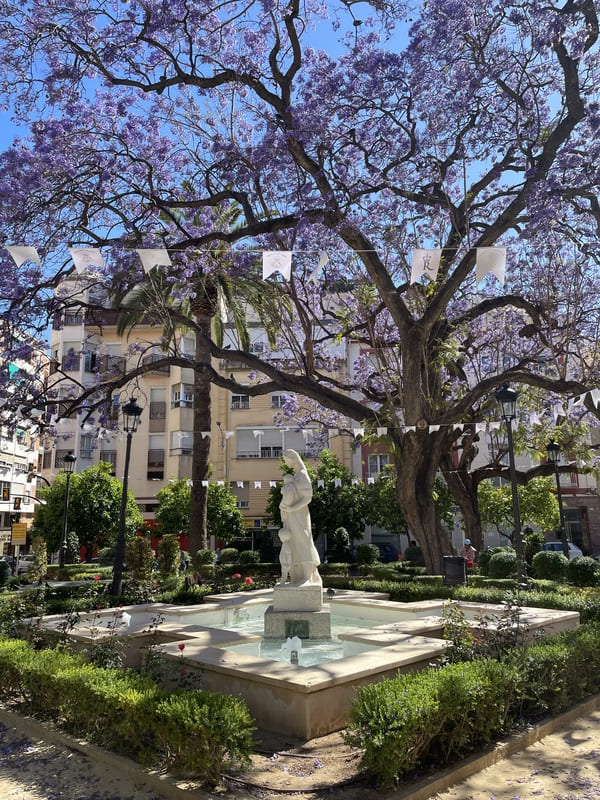
- Best for: first visit, weekend break, travellers without a car
- Getting there: Cercanías C1 and Línea A bus from the airport; La Malagueta beach is a 10-15 minute walk
- Budget: €€ to €€€
- Rating: ★★★★★
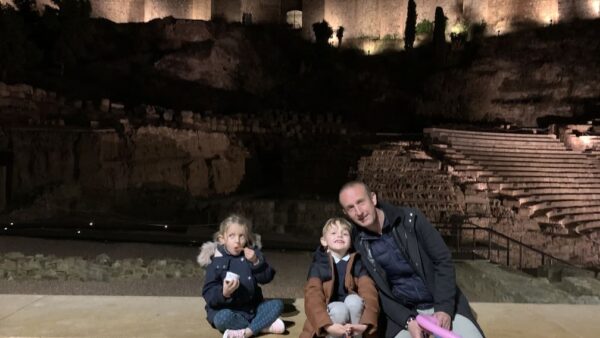
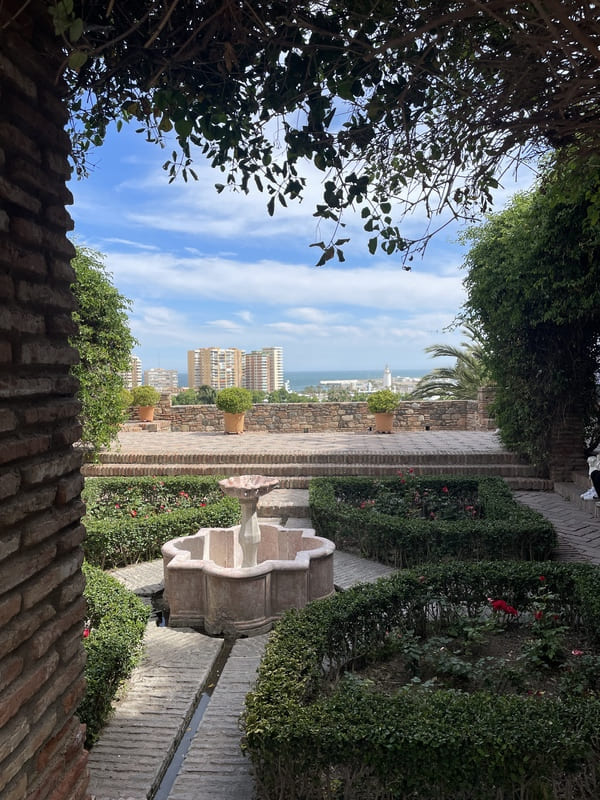
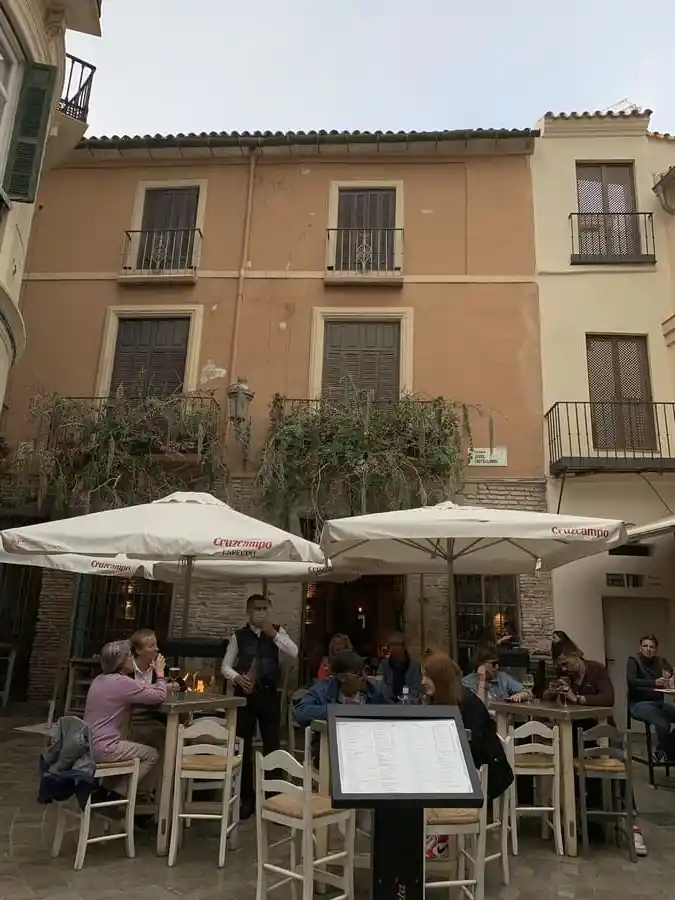
The historic centre is the easiest choice for a first trip to Malaga. The Alcazaba, the Roman theatre, the cathedral, the Picasso Museum and Atarazanas market are all a few minutes apart. You can pop back to drop your bags between visits and go out for dinner without checking the time of the last bus. It's also the area with the most hotels, from hostels to restored palaces.
What surprises people is how much one street differs from the next. Calle Larios and the streets around it stay busy until late, and the lanes around the cathedral and towards Calle Granada near La Merced are lively too. If you value your sleep, ask for a room facing the inner courtyard or on a high floor.
Pros: everything on foot, a huge choice of hotels, nightlife, starting point for walking tours and day trips.
Cons: night-time noise, higher prices, little parking, streets packed with cruise passengers on some days.
Avoid if… you're travelling by car or looking for total peace and quiet.
Where to stay in the centre of Malaga:
- Hotel Don Curro (€€): a classic 3-star hotel a stone's throw from Calle Larios, with solid value for money. Check prices
- Catalonia Molina Lario (€€€): next to the cathedral, with a rooftop terrace. Check prices
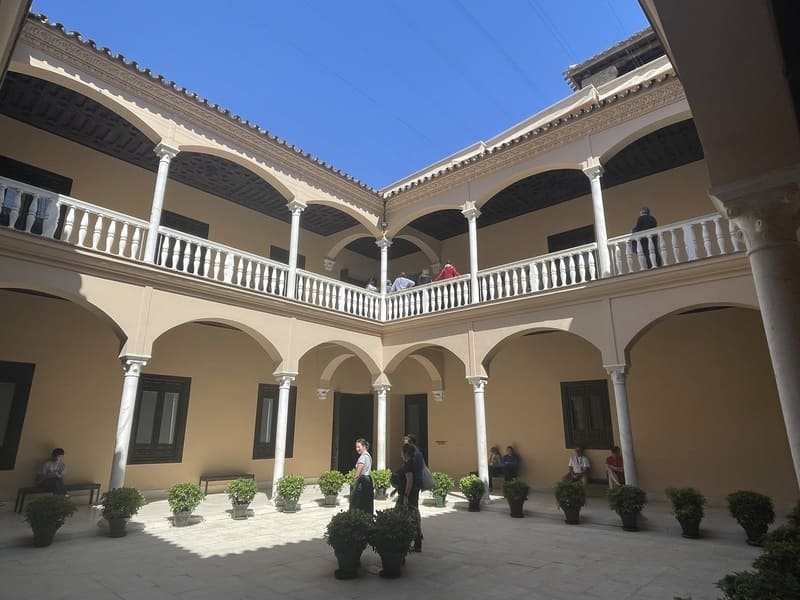
- Palacio Solecio (€€€): an 18th-century palace turned boutique hotel, near Plaza de la Merced. Check prices
- On a budget: the capsule and dorm hostels in the centre, such as Coeo Pod Hostel Beatas. Check prices
Tip: on your first day, join a walking tour of the centre to get your bearings.
2. Soho, the street art district between the centre and the port
- Best for: couples, city lovers, mid-range budgets that want to stay central
- Getting there: Alameda Principal stop (Línea A bus), Centro-Alameda station (Cercanías) a few minutes away
- Budget: € to €€
- Rating: ★★★★☆
Soho is the centre without the bustle of Calle Larios. Squeezed between the Alameda Principal, the Guadalmedina river and the port, this small district made its name with giant murals and the CAC Málaga, the contemporary art centre (free entry). The cafés and restaurants are newer, the vibe is younger, and hotels are often a little cheaper than two streets from the cathedral.
You're less than ten minutes' walk from Calle Larios, and only slightly further from Muelle Uno, the port promenade. For a first trip, it's an excellent compromise.
Pros: central, quieter than the historic core, good value.
Cons: less old-world charm, a few dull streets, busy avenues around it.
Avoid if… you dream of Andalusian lanes and flower-filled patios under your window.
Where to stay in Soho:
- Hotel Sur Málaga (€€): a modern, understated hotel in the heart of Soho. Check prices
- Mariposa Hotel Málaga (€€): a design hotel right in Soho. Check prices
- Only YOU Hotel Málaga (€€€): on the Alameda Principal, where Soho meets the centre, with a rooftop. Check prices
- AC Hotel Málaga Palacio (€€€): facing the port, between Soho and the cathedral, famous for its panoramic terrace. Check prices
3. La Malagueta, the beach ten minutes from the cathedral
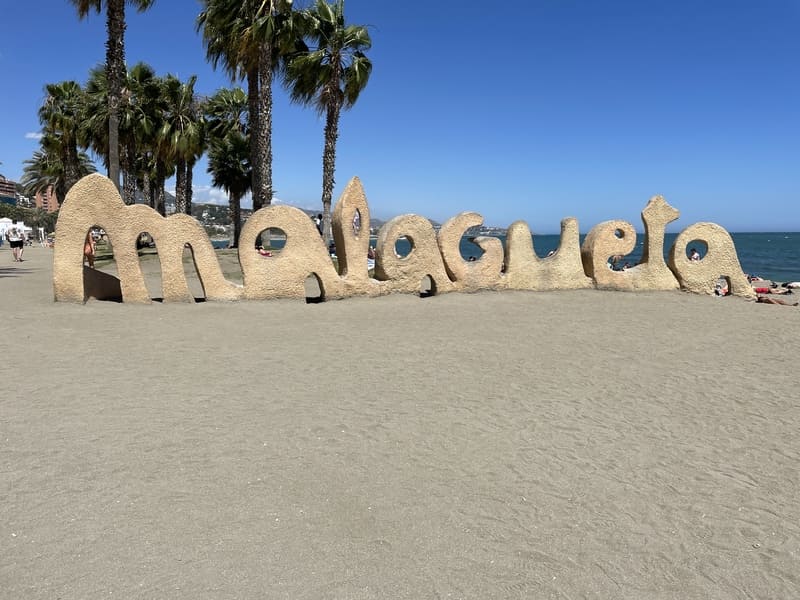
- Best for: beach and culture, families, summer stays
- Getting there: historic centre 10-15 minutes on foot; Línea A bus to Paseo del Parque
- Budget: €€ to €€€
- Rating: ★★★★★
La Malagueta gives you the best of both worlds: the beach below your hotel and the sights within walking distance. This district east of the port grew up in the 19th century as a seaside neighbourhood for Malaga's middle classes. It's home to the bullring, the long city beach of La Malagueta and, just after it, La Caleta beach. Swim in the morning, walk up to the Alcazaba in the afternoon.
If you're coming between June and September, this is the area I recommend most often. Prices follow suit: the seafront hotels are among the most expensive in the city.
Pros: beach on your doorstep, centre within walking distance, clean and pleasant in the evening.
Cons: high prices in summer, crowded beach in August, less variety of restaurants than in the centre.
Avoid if… you're on a tight budget in high season.
Where to stay in La Malagueta:
- Gran Hotel Miramar (€€€): Malaga's historic grand hotel, 5-star gran lujo, facing the sea. Check prices
- Hotel MS Maestranza (€€): a 4-star hotel on Avenida Cánovas del Castillo, between the bullring and the beach. Check prices
- Parador de Málaga Gibralfaro (€€€): perched on Gibralfaro hill above La Malagueta, for the view (plan on a taxi or a steep walk up). Check prices
To pick your beach, read my guide to the best beaches in Malaga.
4. Pedregalejo, the old fishing village by the water
- Best for: local atmosphere, grilled fish lovers, stays of a week or more
- Getting there: EMT bus line 11 from the Alameda Principal (around 20 minutes depending on traffic)
- Budget: €€
- Rating: ★★★★☆
Pedregalejo is Malaga's seaside, neighbourhood-life version. This former fishing village east of the city has kept its low houses lined up along the promenade and its small beaches sheltered by breakwaters, where the water is often calmer. In the evening, the promenade fills with local families, and the smell of espetos, sardines grilled on boats filled with sand, drifts everywhere.
The flip side is distance: to visit the centre, you'll need the bus or a long (and lovely) walk along the sea. There are few hotels, and most visitors rent an apartment.
Pros: calm beaches, authentic atmosphere, chiringuitos, a good choice for families.
Cons: few hotels, bus needed for the centre, evenings out limited to the seafront.
Avoid if… it's your first trip and you're only staying two or three days.
Where to stay in Pedregalejo:
- Hotel La Chancla (€€): a small seaside hotel right on the promenade. Check prices
- Apartments in Pedregalejo: the best option for a week or for families. See available places to stay

5. El Palo, the working-class district at the end of the promenade
- Best for: apartment rentals, long stays, seaside on a tight budget
- Getting there: EMT bus line 11 (El Palo end), allow around half an hour to the centre depending on traffic
- Budget: € to €€
- Rating: ★★★☆☆
El Palo continues on from Pedregalejo, more working-class and less touristy. It's a residential fishing neighbourhood with dark-sand beaches, fish restaurants full of local families, and hardly any hotels. People stay here in apartments, often for less than in town, and live at the pace of the neighbourhood.
Pros: lower prices, quieter beaches, real local life.
Cons: far from the centre, almost no hotels, not much going on in the evening.
Avoid if… you want to go out in the centre at night without depending on bus times or a taxi.
See available apartments in El Palo
6. El Perchel and María Zambrano station, for arrivals by train
- Best for: arriving on the AVE, day trips by train or bus (Ronda, Granada, Seville), one-night stopovers
- Getting there: María Zambrano station, bus station, Cercanías to the airport, metro
- Budget: € to €€
- Rating: ★★★☆☆
Staying near María Zambrano station is practical rather than charming. On the other side of the Guadalmedina, El Perchel is a residential area with little to see, but you're next to the trains and the bus station, and about fifteen minutes' walk from the historic centre. It's the right choice if you arrive late by train, leave early on a day trip, or are touring several Andalusian cities.
Pros: transport on your doorstep, often lower prices, quick to the airport.
Cons: little charm, station-district feel, less interesting restaurants.
Avoid if… you're staying several days to explore Malaga itself.
- Barceló Málaga (€€): a design hotel built into María Zambrano station, it doesn't get more convenient. Check prices
7. Near the airport, only for a dawn flight
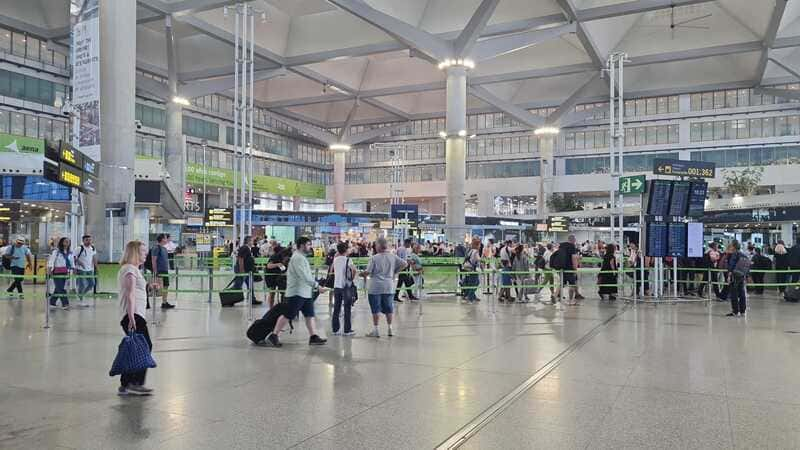
Staying near Malaga airport only makes sense for one night, before a very early flight or after a middle-of-the-night arrival. The city centre is only about ten minutes away by train: for a normal stay, stay in town. For a transit night, airport-area hotels often offer a shuttle, so check when you book.
- Holiday Inn Express Málaga Airport (€): simple and functional for one night. Check prices
Every way to get between the airport and the city is covered in my guide to getting from Malaga airport to the city centre.
⚠️ Which areas should you avoid in Malaga?
There are no dangerous areas where tourists stay in Malaga, but some have nothing to offer for a holiday. The large residential districts to the north and west (Palma-Palmilla, Carretera de Cádiz, Cruz de Humilladero, Teatinos) are far from the sights and the best beaches: a cheap room there costs you in travel time.
In the centre, the real risk is noise. Before you book, check the exact address on the map: a room overlooking a street of bars around Calle Larios, Plaza de la Merced or Plaza Uncibay can cost you a few sleepless nights. And as anywhere crowded, keep an eye on your belongings in the shopping streets and on the beaches.
👥 Where to stay in Malaga for your type of trip
First visit: the historic centre or Soho. You'll see the essentials without wasting time on transport.
With kids: La Malagueta to have the beach and the centre on foot, or an apartment in Pedregalejo for more space and calm beaches. My activity ideas are in my guide to visiting Malaga with kids.
As a couple: a boutique hotel in the centre (Palacio Solecio, Molina Lario) or a sea-view hotel in La Malagueta. The rooftops of the AC Palacio and the Only YOU are worth a visit at sunset.
On a budget: a hostel in the centre, a simple hotel in Soho or near the station, or an apartment in El Palo out of season.
With a car: avoid the pedestrianised centre. Choose a hotel with parking in La Malagueta, near the station or in the east, or use a public car park by the day.
A week or more: an apartment in Pedregalejo or La Malagueta, with day trips along the Costa del Sol or inland.
✅ How to choose your accommodation in Malaga
- ✅ 2 or 3 days, no car → historic centre
- ✅ Beach every day + sightseeing → La Malagueta
- ✅ Local atmosphere and grilled fish → Pedregalejo
- ✅ Central but a little cheaper → Soho
- ✅ Late arrival by train or lots of day trips → María Zambrano station
- ✅ Flight before 7 am → hotel near the airport
🏠 Hotel or apartment in Malaga?
A hotel is simpler for a short stay; an apartment is better value beyond four or five nights or for families. Malaga has a very large number of holiday rentals, especially in the centre, and the city council has frozen new licences in parts of the city. A genuine listing in Andalusia shows a tourist registration number: if you can't see one, move on.
- Air conditioning: essential from June to September, check it's in every room.
- Lift: many old buildings in the centre don't have one.
- Self check-in: most apartments use a key box or a code, so ask about the latest arrival time.
- ID: in Spain, hotels and apartments must register their guests. You'll be asked for your passport or ID card.
See apartments to rent in Malaga
📅 When should you book your accommodation in Malaga?
Book two to three months ahead for summer, Semana Santa and the Feria; a few weeks is enough the rest of the year. The Malaga Feria takes place every year in August: for that week, the centre parties day and night, prices soar and peace and quiet disappear. Semana Santa, with its spectacular processions through the centre, also fills the hotels. From November to February, on the other hand, you'll find well-located rooms at much lower prices, often with pleasant weather.
🌴 Should you stay elsewhere on the Costa del Sol?
If the pool and the beach matter more to you than the city, the Costa del Sol has other options. Torremolinos and Benalmádena, linked to Malaga by the Cercanías C1, are where you'll find the big hotels with pools and all-inclusive deals. Marbella plays the upmarket card, and Nerja, to the east, offers a white village on the cliffs. For a first trip focused on Malaga, the city is still more convenient: you'll avoid daily back-and-forth journeys.
❓ FAQ: your questions about where to stay in Malaga
What is the best area to stay in Malaga?
For a first visit, the historic centre is the best area to stay in Malaga. You're within walking distance of the Alcazaba, the cathedral and the Picasso Museum. If you want the beach too, La Malagueta is the ideal alternative, a 10-15 minute walk from the centre.
Is it better to stay in the centre or near the beach?
For a short stay, the centre; for a summer holiday built around swimming, the beach. La Malagueta gives you both. Pedregalejo and El Palo are nicer for the sea, but you'll need a bus to see the city.
Where can I stay cheaply in Malaga?
The cheapest options are hostels in the centre, simple hotels in Soho and around the station, and apartments in El Palo. Travelling between November and February also brings prices down a lot.
Is the centre of Malaga noisy at night?
Yes, some streets in the centre are noisy until late, especially at weekends and in summer. Avoid rooms overlooking the bar streets around Calle Larios, Plaza de la Merced or Plaza Uncibay, and ask for a room facing the courtyard.
Should I stay near María Zambrano station?
Only if you're arriving or leaving by train, or planning lots of day trips. The area is practical but has little charm; the historic centre is about fifteen minutes away on foot.
Is there a tourist tax in Malaga?
No, there is no tourist tax in Malaga as of October 2026. The city council has been asking for permission to introduce one for several years, but it isn't in place yet. The price your hotel shows is the final price, apart from any cleaning fee for an apartment.
Where should families stay in Malaga?
La Malagueta and Pedregalejo are the two best areas for families. La Malagueta combines the beach with sightseeing on foot; Pedregalejo has calmer beaches and more spacious apartments.
🏆 My honest verdict: where to stay in Malaga
If you remember just one thing: to discover Malaga, sleep as close to the centre as you can. The historic centre and Soho save you a huge amount of time, and La Malagueta adds the beach without sacrificing sightseeing. It's what I recommend to most friends who ask me where to stay in Malaga.
Pedregalejo and El Palo are perfect for a second visit or a long stay, once you've seen the sights and want to live at the pace of the sea. The station and airport areas are best kept for a one-night stopover.
⭐ My recommendation: for a first trip, book in the historic centre, between the cathedral and Soho, on a quiet street. You'll have everything on foot, the beach fifteen minutes away and the airport train close by. See hotels in chttps://booking.stay22.com/vivremalaga/O_psyNKhbdentral Malaga
Your next steps
- Choose your area using the comparison table, then book early if you're coming in summer.
- Plan your arrival with the airport-to-centre journey.
- Build your itinerary with my list of Malaga's must-sees.
Plan your trip to Malaga
- What to see in Malaga: the must-see attractions
- The 12 best beaches in and around Malaga
- How to get around Malaga: bus, metro, train and taxi
- Visiting Malaga with kids: my best tips
- Best brunch in Malaga, neighbourhood by neighbourhood
If you know other areas or places to stay in Malaga, tell us about them in the comments.
Written by Emilie
Living in Spain for 10 years, Emilie shares her favourite spots, itineraries and tips for discovering the city like a local.